This is clearly much more favorable than forfeiting your ownership to a centralized company. Imagine the centralized company (or bank) you trusted with your funds closes down, In this instance, your funds might be at risk. This coin exists as a censorship-resistant store of value and medium of exchange that has a secure, fixed monetary policy.
- Some utility tokens may act as in-game currencies, whereas others may be awarded as part of a loyalty scheme when using a specific company.
- The most significant difference is that cryptocurrencies operate independently of an existing blockchain, while tokens are created and managed on top of an existing blockchain.
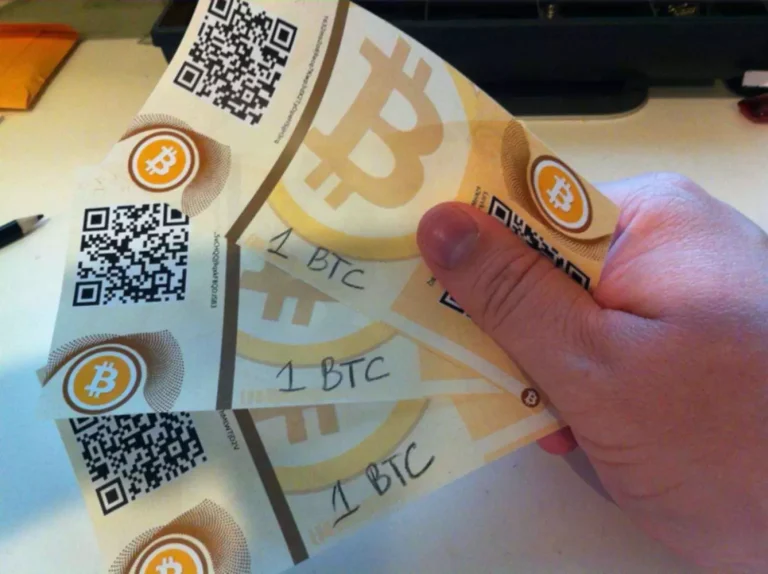
- Bitcoin, for example, is a coin because it has its own blockchain (known as the Bitcoin blockchain).
- Cryptocurrencies are often viewed as a form of currency or commodity and are subject to regulations governing financial services and commodities trading.
- You can discover many other differences between cryptocurrencies and crypto tokens by understanding each of them comprehensively.
- It uses UNI as its native token, an ERC-20 supported by the Ethereum blockchain.
Crypto tokens generally facilitate transactions on a blockchain but can represent an investor’s stake in a company or serve an economic purpose, just like legal tender. This means token holders can use them to make purchases or trades just like other securities to make a profit. Crypto tokens are still being created and used to raise funds for projects through ICOs. Whitepapers read like pitchbooks, outlining the token’s purpose, how it will be sold, how the funds will be used, and how investors will benefit. The question of whether to buy coins or tokens is largely dependent upon a holder’s goals.
Crypto tokens are an integral necessity for the constantly evolving ecosystem of decentralized applications. Most importantly, crypto tokens are a vital component in the newly emerging NFT and DeFi ecosystems across various games and lending platforms. As a matter of fact, cryptocurrencies and crypto tokens are distinct subclasses of digital assets, leveraging the capabilities of cryptography. The benefits of cryptography as an advanced encryption technique helps in verifying the authenticity of crypto assets. Cryptography takes away any possibilities of double-spending or counterfeiting in crypto assets.
Midjourney v4 vs v5 Key Differences
Altcoins can have different purposes beyond just serving as a digital currency. ” might be a little different for you now as compared to the beginning of the discussion. You can notice the numerous subtle differences between cryptocurrencies and tokens. The basic overview of cryptocurrencies and crypto tokens, as well as their design and functionalities, reflects a lot on the differences between them. Smart contracts are basic protocols for automating transactions according to mutually agreed conditions in contracts.
Developers may also refer to this blockchain as layer-1 because it doesn’t rely on another network. The code that governs a native blockchain is self-contained, and its coins are only valid because of the protocol’s built-in features. Initially, these virtual coins and tokens were designed as a non-sovereign alternative to fiat currencies like the USD. However, a digital asset can have a central authority and still be classified as a cryptocurrency.
Token standards
Blockchains rely on cryptocurrency to incentivize individuals, groups, and sometimes even organizations to run the network. To understand why financial incentive is necessary, it’s helpful to know—very generally—how blockchains work. This means they are more than sufficient for temporary or singular use cases. Believe it or not, some tokens on the Ethereum chain have grown so far that they outweigh many coins with their own entire networks. Even as an Ethereum token, DAI has far surpassed the Avalanche Network in terms of market cap. Tokens, on the other hand, provide purpose and utility to the network’s users, promoting the network’s growth in relevance and users.
Therefore, a token is any crypto issued on another blockchain project, typically a smart contract blockchain like Ethereum. Blockchain developers can release tokens on any blockchain, but Ethereum is a common choice. In fact, the category of tokens didn’t take off until Ethereum introduced smart contract technology. Smart contracts make it easier for developers to launch dApps (decentralized apps) using blockchains like Ethereum. The differences between cryptocurrencies and crypto tokens are fundamental. Crypto tokens aren’t meant to be standalone currencies, but rather to represent a certain value, utility, or function within a specific blockchain network or platform.
A good example of an Ethereum token is SAND, the currency of blockchain metaverse, The Sandbox. This ERC-20 token lives on the Ethereum network, however, its primary purpose is as an in-game currency in the Sandbox game. If you lose your Bitcoin, for example, forgetting your wallet’s password or losing the private keys needed to access your Bitcoin, it can be almost impossible to recover. Unlike traditional banking institutions, you can’t call a hotline to restore your access. This article is not an endorsement of any particular cryptocurrency, broker or exchange nor does it constitute a recommendation of cryptocurrency as an investment class.
Cryptocurrencies vs. crypto tokens
Build your identity as a certified blockchain expert with 101 Blockchains’ Blockchain Certifications designed to provide enhanced career prospects. In this article, we’re going to dissect these terms to understand the distinction between them. Brokers might find it useful for optimizing their future offerings, while traders and investors will be able to utilize this knowledge to make informed decisions. However, it can be difficult to distinguish between a scam token and one representing an actual business endeavor. By contrast, in the current version of the Internet—Web 2.0—databases, websites, and applications often live on centralized servers.

So naturally, their innovation opened the door to platforms capitalizing on this interoperability. On the other hand, crypto tokens are developed for serving additional functionalities on platforms created on existing blockchain networks. For example, many ERC-20 tokens in the Ethereum ecosystem are crypto tokens. However, the difference between cryptocurrencies and tokens is not limited only to this particular highlight.
To explain, there are multiple currencies (and other assets) on the Ethereum network that are not Ethereum’s native Ether and each of those assets are known as tokens. Bitcoin and other cryptocurrencies that run on their own blockchain are considered coins. When most people think of cryptocurrency, they probably think of coins like Bitcoin. The applications of crypto tokens extend beyond the usual medium of transfer and store of value functionalities. You can find a clear overview of tokens vs. cryptocurrencies by identifying the use cases of crypto tokens.
Bonds Shine as Bitcoin and S&P 500 Brace for Quarterly Losses
For instance, the Basic Attention Token (BAT) is an ERC-20 token built on Ethereum, but used for specific utility related to Brave and Brave Rewards. NFT, or Non-Fungible Token, is a type of token representing a unique item or piece of content. Unlike cryptocurrencies pros and cons of token economy such as Bitcoin or Ethereum, which are fungible and can be exchanged one-for-one, NFTs are unique and can’t be exchanged like-for-like. Crypto, short for cryptocurrency, is a digital or virtual currency that uses cryptography for security.
A few of today’s most prominent tokens include Chainlink, Uniswap, and Aave. Some cryptocurrencies have a clear centralized issuer, such as Circle for USDC and Tether Limited for USDT. However, there are many decentralized crypto projects like Bitcoin that have no clear leader or governance structure. Understandably, many developers want to focus on building their Web3 games, DeFi protocols, or other DApps without worrying about building the blockchain they’ll live on. For all these reasons, developers will often issue tokens rather than full cryptocurrencies.
The ERC-20 standard, for example, makes it possible for tokens to be easily integrated in an Ethereum wallet and used across Ethereum-based DApps. Cryptocurrencies belong to their own native network; crypto tokens do not. Each blockchain has only one cryptocurrency, but may have hundreds or thousands of crypto tokens. With Ledger’s ecosystem you can store and manage both https://www.xcritical.com/ coins and tokens with confidence they are secure while retaining ownership. You can even lend, borrow and access countless blockchain apps directly within Ledger Live, meaning you don’t need to forfeit custody of your keys to start exploring. In short, not all coins are secure, not all coins are decentralized and, in fact, some coins don’t have a solid purpose at all.
The term cryptocurrency refers to a class of digital assets that rely on cryptography and blockchain technology. Indeed, the feature that ties all cryptocurrencies together is their reliance on blockchain networks. And lastly, both cryptocurrencies and crypto tokens (even those belonging to different blockchain networks) can often be stored in the same crypto wallet. Check out Brave Wallet if you’re looking for secure storage for all your crypto assets (including cryptocurrencies, tokens, and NFTs) built right into your browser. On the other hand, the interchangeably used terms have some key differences between them.
Therefore, you can identify that cryptocurrency units are integrated into protocol of the blockchain software only. The basic understanding of cryptocurrencies and crypto tokens offers a basic ground to start uncovering the differences between them. You must have predicted some of the differences from a fundamental overview of cryptocurrencies and tokens. Here are some of the notable differences you can find in cryptocurrencies vs. token debate. Utility tokens are often used in decentralized applications (dApps) and blockchain platforms, where they provide users with access to certain features or services.