Cryptocurrency news
In January 2024 the SEC approved 11 exchange traded funds to invest in Bitcoin. There were already a number of Bitcoin ETFs available in other countries, but this change allowed them to be available to retail investors in the United States https://www.best-aucasinosites.com/. This opens the way for a much wider range of investors to be able to add some exposure to cryptocurrency in their portfolios.
The total crypto market volume over the last 24 hours is $148.44B, which makes a 10.43% decrease. The total volume in DeFi is currently $25.86B, 17.42% of the total crypto market 24-hour volume. The volume of all stable coins is now $139.43B, which is 93.93% of the total crypto market 24-hour volume.
Binance Coin (BNB) is a form of cryptocurrency that you can use to trade and pay fees on Binance, one of the largest crypto exchanges in the world. Since its launch in 2017, Binance Coin has expanded past merely facilitating trades on Binance’s exchange platform. Now, it can be used for trading, payment processing or even booking travel arrangements. It can also be traded or exchanged for other forms of cryptocurrency, such as Ethereum or bitcoin.
When exploring cryptocurrency investments, first consider the exchanges where the token is listed. Tokens featured on major exchanges generally offer better liquidity, attracting larger investors and reaching a broader audience, which in turn increases the potential buyer base.

Cryptocurrency market
With a blockchain, it’s possible for participants from across the world to verify and agree on the current state of the ledger. Blockchain was invented by Satoshi Nakamoto for the purposes of Bitcoin. Other developers have expanded upon Satoshi Nakamoto’s idea and created new types of blockchains – in fact, blockchains also have several uses outside of cryptocurrencies.
A cryptocurrency exchange is a platform that facilitates markets for cryptocurrency trading. Some examples of cryptocurrency exchanges include Binance, Bitstamp and Kraken. These platforms are designed to provide the best possible prices for both buyers and sellers. Some exchanges only offer cryptocurrency markets, while others also allow users to exchange between cryptocurrencies and fiat currencies such as the US dollar or the euro. You can buy and sell Bitcoin on practically all cryptocurrency exchanges, but some exchanges list hundreds of different cryptocurrencies. One metric that is important for comparing cryptocurrency exchanges is trading volume. If trading volume is high, your trades will execute fast and at predictable prices.
Cryptocurrencies are digital assets that are secured by cryptography. They use decentralized networks to transfer and store value, and the transactions are recorded in a publicly distributed ledger known as the blockchain. Transactions are verified by network nodes and recorded in a public distributed ledger known as the blockchain. Cryptocurrency transactions are secure, and are verified by a decentralized network of computers.
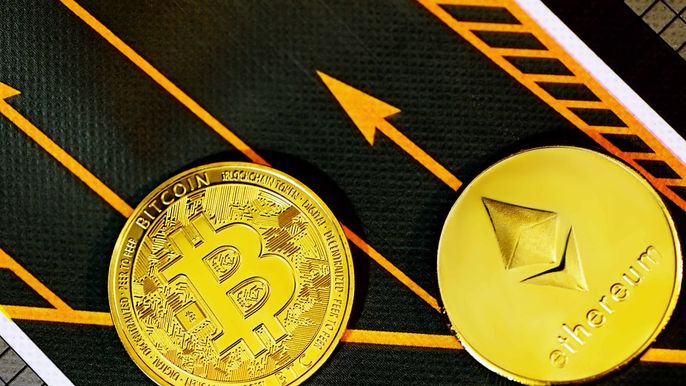
However, Bitcoin is far from the only player in the game, and there are numerous altcoins that have reached multi-billion dollar valuations. The second largest cryptocurrency is Ethereum, which supports smart contracts and allows users to make highly complex decentralized applications. In fact, Ethereum has grown so large that the word «altcoin» is rarely used to describe it now.
These crypto coins have their own blockchains which use proof of work mining or proof of stake in some form. They are listed with the largest coin by market capitalization first and then in descending order. To reorder the list, just click on one of the column headers, for example, 7d, and the list will be reordered to show the highest or lowest coins first.
Cryptocurrency news
VanEck joins a burgeoning field of traditional financial firms that have launched RWA tokenized funds, with competitors including BlackRock and Franklin Templeton. In January, Apollo, an investment firm with $751 billion in assets under management, also launched a private credit tokenized fund.
Today in crypto, Twenty One Capital had a $458.7 million worth of Bitcoin injection from Tether, VanEck is launching its first tokenized fund backed by US Treasurys, and Arizona Governor Katie Hobbs has vetoed bills aimed at creating a state Bitcoin reserve and enabling crypto payments.
Stablecoin issuer Tether bought $458.7 million worth of Bitcoin for Twenty One Capital on May 13, a Bitcoin investment firm it backed that’s working on a Special Purpose Acquisition Company (SPAC) merger with Cantor Equity Partners.
Its Bitcoin holdings are the third-largest among public companies, trailing only Strategy, formerly MicroStrategy and Bitcoin mining firm MARA Holdings at 568,840 Bitcoin and 48,237 Bitcoin, respectively.
VanEck joins a burgeoning field of traditional financial firms that have launched RWA tokenized funds, with competitors including BlackRock and Franklin Templeton. In January, Apollo, an investment firm with $751 billion in assets under management, also launched a private credit tokenized fund.
Today in crypto, Twenty One Capital had a $458.7 million worth of Bitcoin injection from Tether, VanEck is launching its first tokenized fund backed by US Treasurys, and Arizona Governor Katie Hobbs has vetoed bills aimed at creating a state Bitcoin reserve and enabling crypto payments.
What is cryptocurrency
According to Vanessa Grellet, renowned panelist in blockchain conferences, there was an increasing interest from traditional stock exchanges in crypto-assets at the end of the 2010s, while crypto-exchanges such as Coinbase were gradually entering the traditional financial markets. This convergence marked a significant trend where conventional financial actors were adopting blockchain technology to enhance operational efficiency, while the crypto world introduced innovations like Security Token Offering (STO), enabling new ways of fundraising. Tokenization, turning assets such as real estate, investment funds, and private equity into blockchain-based tokens, had the potential to make traditionally illiquid assets more accessible to investors. Despite the regulatory risks associated with such developments, major financial institutions, including JPMorgan Chase, were actively working on blockchain initiatives, exemplified by the creation of Quorum, a private blockchain platform.
Mining for proof-of-work cryptocurrencies requires enormous amounts of electricity and consequently comes with a large carbon footprint due to causing greenhouse gas emissions. Proof-of-work blockchains such as bitcoin, Ethereum, Litecoin, and Monero were estimated to have added between 3 million and 15 million tons of carbon dioxide (CO2) to the atmosphere in the period from 1 January 2016 to 30 June 2017. By November 2018, bitcoin was estimated to have an annual energy consumption of 45.8TWh, generating 22.0 to 22.9 million tons of CO2, rivalling nations like Jordan and Sri Lanka. By the end of 2021, bitcoin was estimated to produce 65.4 million tons of CO2, as much as Greece, and consume between 91 and 177 terawatt-hours annually.
On November 2, 2023, Sam Bankman-Fried was pronounced guilty on seven counts of fraud related to FTX. Federal criminal court sentencing experts speculated on the potential amount of prison time likely to be meted out. On March 28, 2024, the court sentenced Bankman-Fried to 25 years in prison.
However, in 2021, there was a backlash against donations in bitcoin because of the environmental emissions it caused. Some agencies stopped accepting bitcoin and others turned to «greener» cryptocurrencies. The U.S. arm of Greenpeace stopped accepting bitcoin donations after seven years. It said: «As the amount of energy needed to run bitcoin became clearer, this policy became no longer tenable.»
According to the UK 2020 national risk assessment—a comprehensive assessment of money laundering and terrorist financing risk in the UK—the risk of using cryptoassets such as bitcoin for money laundering and terrorism financing is assessed as «medium» (from «low» in the previous 2017 report). Legal scholars suggested that the money laundering opportunities may be more perceived than real. Blockchain analysis company Chainalysis concluded that illicit activities like cybercrime, money laundering and terrorism financing made up only 0.15% of all crypto transactions conducted in 2021, representing a total of $14 billion.